Understanding Veritatis Splendor – Book Review
Book Review: Understanding Veritatis Splendor – With Comment and Analysis
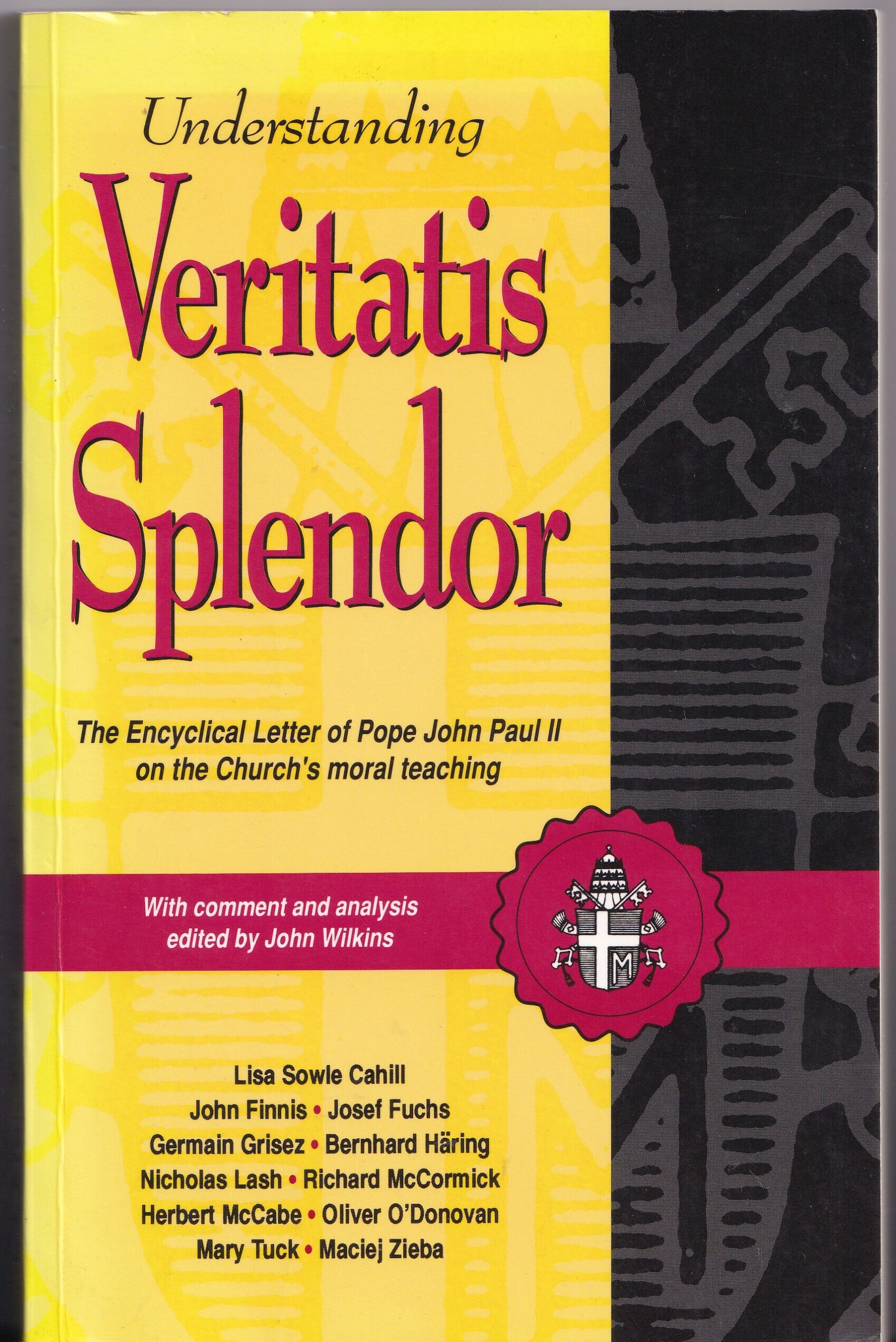
Understanding Veritatis Splendor: The Encyclical Letter of Pope John Paul II on the Church’s Moral Teaching: With Comment and Analysis is a guide to one of the most significant Catholic theological documents of the late twentieth century. Edited by John Wilkins and published by SPCK in 1994, the book brings together the encyclical’s teaching and accompanying commentary to help readers engage with its central arguments about morality, conscience, freedom and truth.
Understanding the Church’s Moral Teaching
Published by Pope John Paul II in 1993, Veritatis Splendor addresses fundamental questions about how people distinguish right from wrong and the relationship between Christian faith and moral conduct. The encyclical challenges the idea that moral judgements can be separated entirely from objective truth, arguing instead that genuine freedom must be understood in relation to truth and the moral law.
This volume is particularly useful because it places the papal document within a framework of comment and analysis. Rather than simply presenting a theological text for readers to interpret alone, it offers a way into the arguments and controversies surrounding Catholic moral theology. The result is a more accessible starting point for readers seeking to understand both what John Paul II taught and why his arguments mattered.
Key Themes: Truth, Freedom and Conscience
At the heart of Veritatis Splendor is the conviction that freedom and truth belong together. John Paul II argues that freedom is not simply the ability to choose whatever one wishes, but a capacity that finds its proper fulfilment in the pursuit of the good. The encyclical also examines the role of conscience, the authority of the Church’s moral teaching and the question of whether certain actions can be considered wrong in themselves, regardless of a person’s intentions or circumstances.
These are demanding subjects, and they remain relevant to discussions about personal responsibility, ethical decision-making and the place of religious principles in modern society. The commentary helps readers approach these questions in their proper theological context rather than reducing the encyclical to a collection of rules or prohibitions.
Comment and Analysis
One of the book’s main strengths is its focus on explanation. Catholic moral theology can be difficult to navigate, particularly for readers unfamiliar with the distinctions between moral principles, conscience, intention and the consequences of human actions. A volume that combines the encyclical with commentary provides a useful route through this material.
The book is also valuable for readers who want to understand the intellectual debate surrounding the document. John Paul II was responding to questions about developments in moral theology and the foundations on which moral judgements should rest. His insistence on the existence of objective moral truths raises important questions about the limits of individual judgement and the relationship between personal autonomy and religious authority.
Readers should not expect a neutral introduction to every competing school of moral philosophy. The work is rooted in the Catholic theological discussion surrounding the encyclical, and its value lies in helping readers understand that discussion. Those approaching the subject from a secular or non-Catholic perspective may wish to read it alongside alternative interpretations of moral philosophy.
Who Should Read This Book?
Understanding Veritatis Splendor will appeal particularly to students of theology, Catholic readers interested in the Church’s teaching, clergy, religious educators and anyone studying the development of Christian ethics. It may also interest readers exploring the broader relationship between religion, philosophy and moral responsibility.
Although the subject is specialised, the underlying questions are universal: What makes an action right or wrong? How should conscience guide decisions? Is freedom best understood as unrestricted choice, or does it carry responsibilities grounded in a wider understanding of human dignity and the good?
The book is best approached as a study aid rather than light religious reading. Readers willing to engage with its theological arguments should find it a useful resource for further study and reflection.
Verdict
Understanding Veritatis Splendor: The Encyclical Letter of Pope John Paul II on the Church’s Moral Teaching: With Comment and Analysis offers a worthwhile introduction to an important document in modern Catholic thought. Its combination of papal teaching and explanatory commentary makes it particularly helpful for readers who want to move beyond a general awareness of the encyclical and examine its arguments in greater depth.
The subject matter is serious and sometimes challenging, and readers looking for a broad, introductory account of Christianity may find it too specialised. For anyone interested in Catholic ethics, the nature of moral truth or the relationship between freedom and conscience, however, this is a valuable book to explore.
Recommended for: Students of Catholic theology, readers of Christian ethics, clergy and anyone interested in Pope John Paul II’s moral teaching.
Looking for a copy?
You can check availability of this book at KO7.com, the online second-hand bookshop.