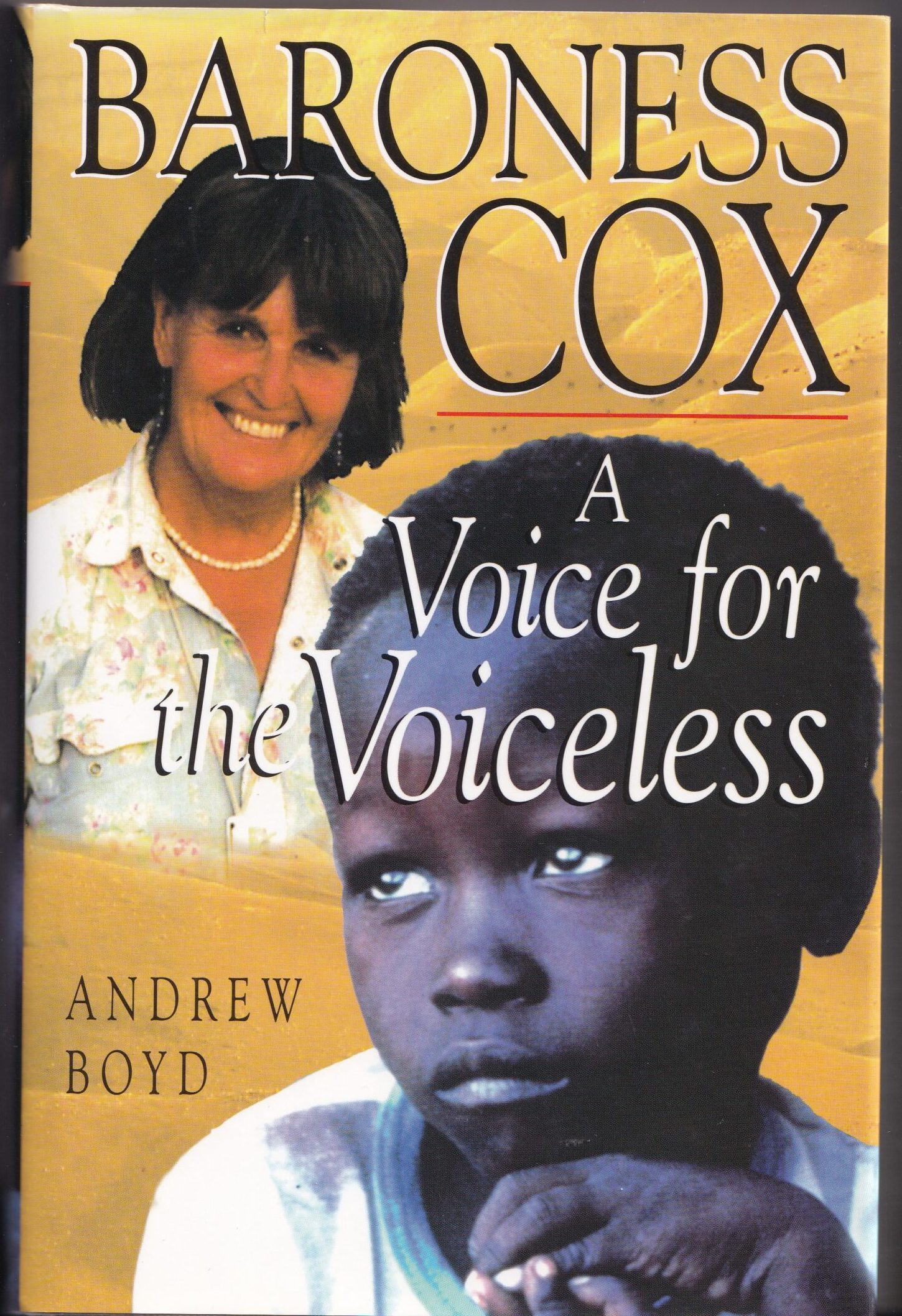
Baroness Cox: A Voice for the Voiceless – Book Review
Baroness Cox: A Voice for the Voiceless by Andrew Boyd – Hardback (1998)
Some biographies tell the story of a life; others also provide a window into conflicts and humanitarian crises that receive relatively little attention. Baroness Cox: A Voice for the Voiceless by Andrew Boyd is a biography of Caroline Cox, whose work as a nurse, academic, parliamentarian and human rights campaigner took her into some of the world’s most troubled regions.
From Academic Life to Humanitarian Campaigning
The book traces Cox’s early career in nursing and sociology before turning to her work in public life and her appointment to the House of Lords. Boyd describes a woman prepared to challenge established opinion and draw attention to people whose suffering might otherwise be overlooked.
Central to the story is Cox’s determination to visit communities affected by war, persecution and displacement. Her activities took her to places including Sudan, Nagorno-Karabakh, Burma and parts of the former Soviet Union. These journeys form an important part of the biography, illustrating the risks involved in documenting human suffering and bringing accounts of it to a wider audience.
Human Rights and Forgotten Conflicts
One of the book’s main themes is the importance of speaking up for people who have little opportunity to make their circumstances known internationally. Boyd recounts Cox’s work on issues including slavery in Sudan, religious persecution and the plight of civilians caught up in armed conflicts.
The result is a book that goes beyond the personal story of one campaigner. It also introduces readers to a range of political and humanitarian situations, offering background on places and communities that may be unfamiliar to many readers. The accounts of Cox’s visits give the narrative a strong sense of urgency and bring the human consequences of conflict into focus.
A Portrait of Conviction
Boyd presents Cox as a determined figure whose convictions led her to take on difficult causes, sometimes in dangerous circumstances. Readers interested in Christian humanitarian work will find the role of faith in her campaigning particularly relevant, while those interested in politics and international affairs will find much to consider in her efforts to bring overlooked issues to public attention.
As a biography, the book is sympathetic to its subject and concentrates on her commitment to the causes she pursued. Readers seeking a more detached assessment of the conflicts discussed may wish to consult additional accounts alongside it. Nevertheless, the breadth of the subject matter makes it a useful starting point for exploring Cox’s career and the issues that shaped it.
Who Would Enjoy This Book?
This book should appeal to readers interested in biography, human rights, modern history, international affairs and Christian humanitarian work. It may also interest anyone who wants to learn more about the experiences of people working in difficult environments to draw attention to persecution, conflict and humanitarian need.
Verdict
Baroness Cox: A Voice for the Voiceless is an account of a life shaped by conviction and a willingness to engage with difficult situations. Andrew Boyd combines the story of Caroline Cox’s personal and professional development with accounts of humanitarian campaigning in several parts of the world. It offers an introduction to both the woman and the causes that came to define her public work.
Book Details
- Title: Baroness Cox: A Voice for the Voiceless
- Author: Andrew Boyd
- Publisher: Lion Publishing
- Publication year: 1998
- Format: Hardback
- Subject: Biography, human rights and humanitarian campaigning
Looking for a Copy?
You can check the details and condition of the 1998 hardback edition available from KO7.com.