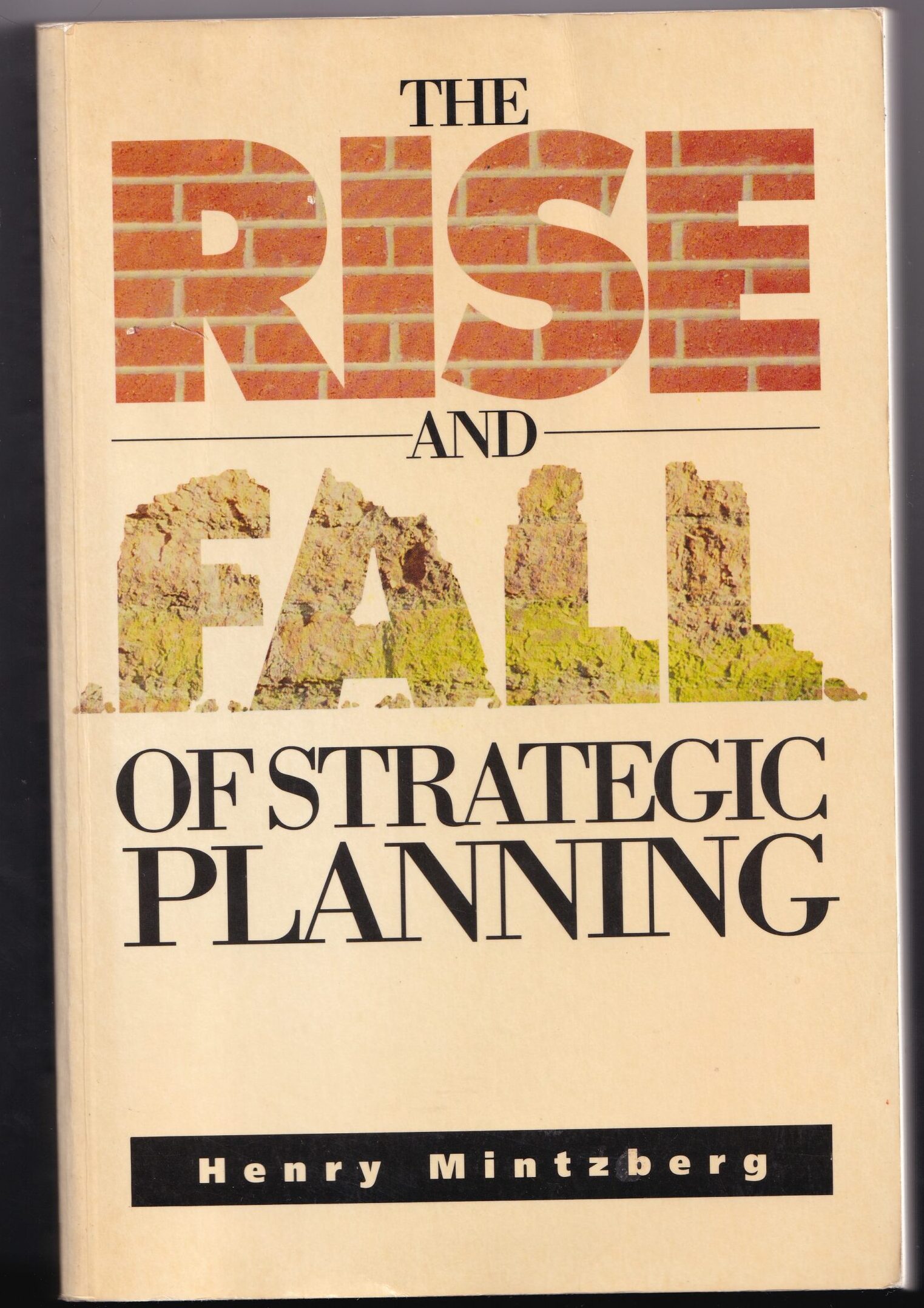
The Rise and Fall of Strategic Planning – Henry Mintzberg Book Review
The Rise and Fall of Strategic Planning by Henry Mintzberg: Book Review
Author: Henry Mintzberg
ISBN-13: 9780137818242
Category: Business Strategy and Management
Introduction
Strategic planning has long been treated as an essential part of successful management. Organisations invest considerable time and resources in setting objectives, analysing markets, preparing forecasts and developing detailed plans for the future. But what happens when the planning process becomes more important than the strategy itself?
In The Rise and Fall of Strategic Planning, Henry Mintzberg challenges some of the most established assumptions in strategic management. He questions whether strategy can genuinely be created through formal planning processes and explores why even carefully constructed plans can fail to deliver meaningful results.
The result is a substantial and thought-provoking examination of how organisations develop strategy, how managers make decisions and why effective strategic thinking requires more than analysis and documentation.
The central argument
Mintzberg draws an important distinction between strategic planning and strategic thinking. Planning is primarily concerned with analysis, structure and the formalisation of intended actions. Strategy, by contrast, also depends on synthesis, judgement, experience, creativity and an understanding of changing circumstances.
His argument is not that planning has no value. Rather, problems arise when organisations assume that a formal planning exercise can produce a successful strategy by itself. A detailed plan may organise existing knowledge, but it cannot reliably predict every market disruption, competitive move or unexpected opportunity.
Mintzberg also challenges the idea that strategic decision-makers can operate independently of the day-to-day realities of their organisations. Valuable strategic insights often emerge from practical experience, organisational learning and the people closest to the work.
What makes the book valuable?
One of the book’s greatest strengths is its willingness to question accepted management practices. Instead of treating strategic planning as an unquestionable virtue, Mintzberg examines its assumptions, limitations and unintended consequences.
He explains how excessive reliance on formal planning can narrow an organisation’s vision, discourage adaptation and create political behaviour around budgets, targets and established procedures. When employees become focused on meeting the plan, they may overlook developments that call for a different approach.
The book also offers a more constructive view of what planners can contribute. Planning professionals need not disappear from the strategy process. Their analytical skills, research and ability to organise information can support decision-making, provided they do not attempt to replace the judgement and learning involved in strategy formation.
This distinction makes the book useful beyond its critique. It encourages managers to reconsider how planning functions within an organisation and how formal systems can support rather than restrict strategic thinking.
Strengths and weaknesses
Strengths: Mintzberg presents a challenging perspective on a familiar management subject. His argument encourages readers to question routine practices, recognise the limits of forecasting and pay closer attention to organisational learning. The book is particularly valuable for managers who want to understand why apparently rational planning systems can produce disappointing outcomes.
Weaknesses: The book is detailed, analytical and sometimes demanding. Readers looking for a short, practical guide to building a strategic plan may find its extensive discussion of planning theory and its historical development difficult to navigate. Its critical stance may also feel uncomfortable to those who regard formal planning frameworks as central to effective management.
Some of the book’s arguments need to be applied with care. Organisations still require budgets, objectives, resource allocation and coordination. The challenge is to use these tools without confusing the existence of a plan with the achievement of a sound strategy.
Who should read this book?
The Rise and Fall of Strategic Planning is particularly relevant to senior managers, business leaders, strategy consultants, management students and planning professionals. It is also useful for anyone who has experienced the gap between an impressive strategic document and what actually happens inside an organisation.
Readers who enjoy questioning conventional business wisdom will find plenty to consider. Those new to strategic management may benefit from taking their time with the book and reflecting on its arguments alongside real organisational examples.
Final verdict
Henry Mintzberg’s The Rise and Fall of Strategic Planning remains a challenging examination of the relationship between analysis, planning and strategic thinking. Its lasting contribution is the reminder that strategy cannot be reduced to a scheduled exercise or a document containing carefully worded objectives.
Good planning can provide structure, evidence and direction, but it must leave room for learning, judgement and change. Organisations need to recognise emerging realities and adapt rather than blindly follow a plan simply because it has been approved.
For readers interested in business strategy and management, this is a worthwhile and intellectually stimulating book. It may not provide a simple formula for strategic success, but it asks important questions about how organisations think, plan and respond to an uncertain world.
Recommended for: Managers, business leaders, strategy professionals and students of strategic management.
Looking for a Copy?
If you’re interested in reading Henry Mintzberg’s The Rise and Fall of Strategic Planning, you can check out the 1994 paperback edition listed at KO7.com for further details about the book and its condition.