Review – Now I Call Him Brother
A critical review of Now I Call Him Brother by Alec Smith needs to grapple with two overlapping dimensions: the book as a personal spiritual memoir and as a historical-political document rooted in late Rhodesia/Zimbabwe.
What follows is a balanced, analytical review that engages both…
Critical Review: *Now I Call Him Brother
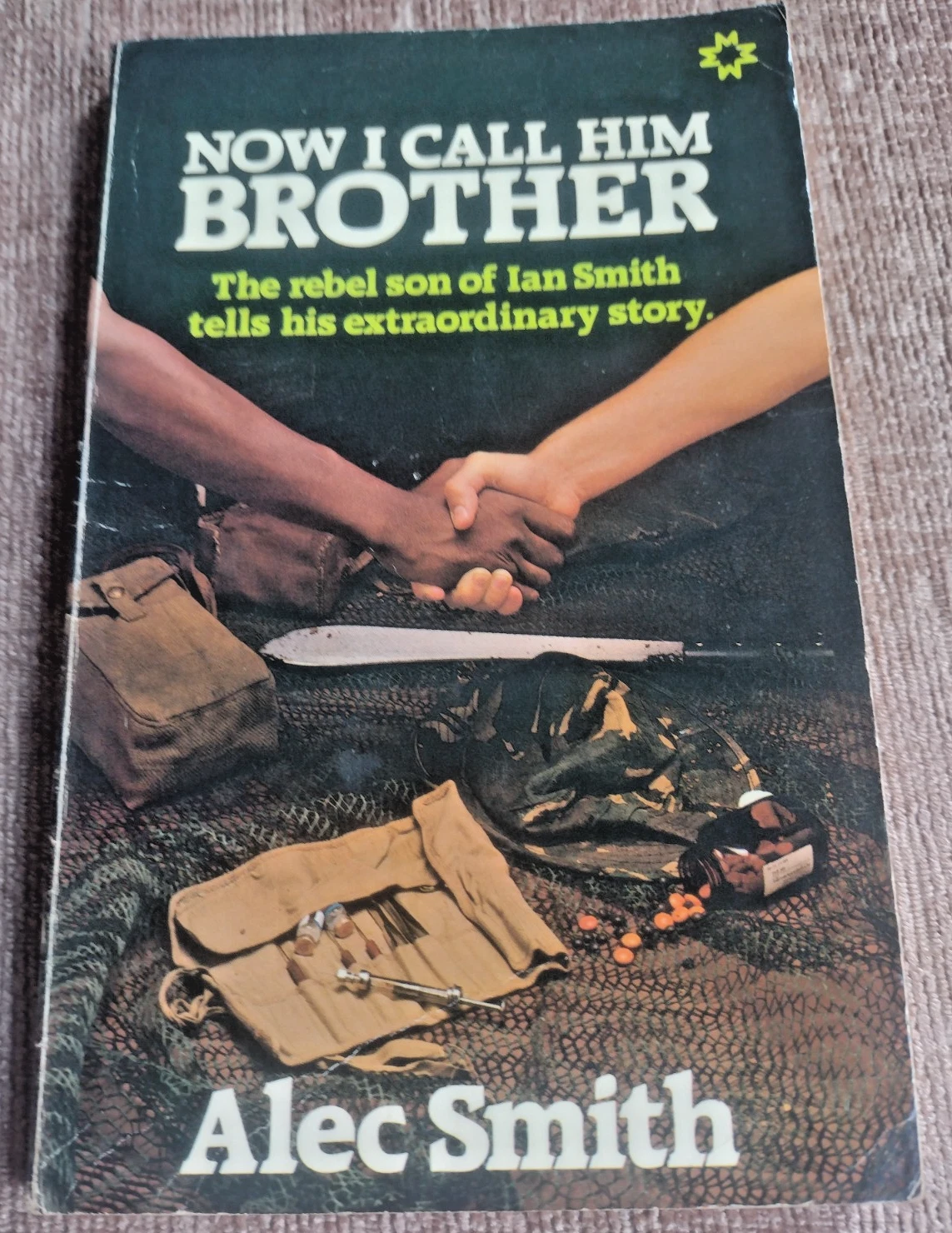
Published in 1984, Now I Call Him Brother is a semi-autobiographical account of Alec Smith’s transformation from the troubled son of Rhodesian Prime Minister Ian Smith into a born-again Christian and advocate for racial reconciliation. Written with the assistance of Rebecca de Saintonge, the book positions itself at the intersection of confession, conversion narrative, and political testimony.
Narrative Strengths: Personal Honesty and Moral Urgency
At its most compelling, the book succeeds as a conversion memoir. Smith’s early life — marked by drug abuse, alienation, and rebellion against his privileged upbringing — provides a dramatic foundation for his later spiritual awakening. His account of hearing a divine voice urging him to read the New Testament becomes the emotional and thematic turning point of the narrative (For A New World).
This transformation is not presented as purely private. Instead, Smith frames his newfound faith as inseparable from a moral reckoning with Rhodesia’s racial inequality. His claim that “the scales fell from [his] eyes” about systemic injustice (For A New World) gives the book a sense of ethical urgency. The memoir’s strongest passages are those that connect inner conversion with outward reconciliation, particularly his relationships with Black nationalist leaders and efforts to bridge divided communities.
In this respect, the book aligns with a tradition of religious autobiographies where personal salvation is inseparable from social mission. The prose — plain, direct, occasionally naïve — serves this purpose well, making the narrative accessible and emotionally immediate.
—
Historical and Political Limitations
However, as a historical document, the book is far more problematic.
Written shortly after Zimbabwe’s independence in 1980, Smith expresses optimism about the country’s future and leadership, including a notably sympathetic view of Robert Mugabe. With hindsight, this optimism appears deeply misplaced. Later developments in Zimbabwe — authoritarianism, economic collapse, and political violence — cast a long shadow over the book’s conclusions.
Critics have noted that this optimism causes the text to “age poorly,” particularly where Smith encourages Christians to support the new regime (oxygenlife.co.za). The issue is not merely that he was wrong — many observers were — but that the book presents its political hopes with unquestioned moral certainty, blurring the line between spiritual conviction and political endorsement.
As a result, modern readers may find themselves reading the text ironically: what was intended as hopeful now reads as a cautionary tale about the dangers of conflating faith with political trust.
—
Literary Weaknesses
From a literary standpoint, Now I Call Him Brother is uneven. The involvement of a ghostwriter gives the narrative coherence, but the prose often lacks stylistic distinction. The structure follows a familiar arc — fall, conversion, redemption — without significant formal innovation.
More critically, the book sometimes simplifies complex political realities into moral binaries. The Rhodesian conflict, a deeply intricate and violent struggle, is filtered through a predominantly spiritual lens. While this reflects Smith’s perspective, it can feel reductive, especially for readers seeking nuanced historical analysis.
—
Thematic Significance: Reconciliation and Identity
Despite its flaws, the book’s central theme — reconciliation across entrenched racial and political divides — remains powerful. Smith’s unique position as the son of a white minority leader who rejected that system gives his story a symbolic weight.
The title itself signals this transformation: “brother” becomes both a religious and political term, suggesting a reimagining of identity beyond race and ideology. Even if the book’s political predictions falter, its insistence on the possibility of personal and communal change retains relevance.
—
Overall Assessment
Now I Call Him Brother is a deeply sincere but historically limited memoir. Its strengths lie in its emotional honesty and its portrayal of personal transformation, while its weaknesses stem from political naïveté and modest literary craft.
Ultimately, the book is best read not as a definitive account of Zimbabwe’s transition, but as a snapshot of hope at a particular historical moment — one that reveals as much about the mindset of its author as it does about the world he was trying to change.
(This review was generated by AI.)