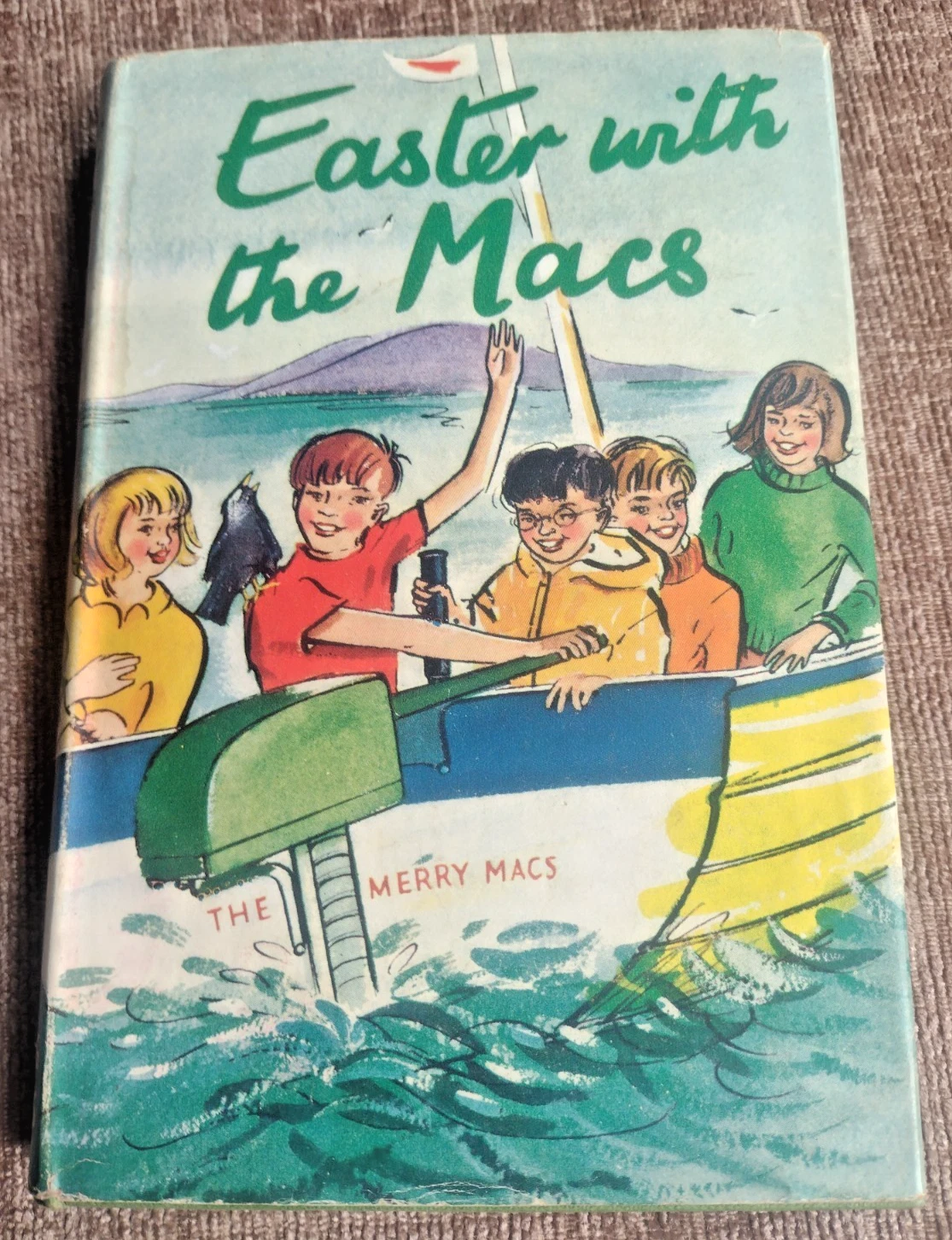
Review – Easter with the Macs by William Aitken
Easter with the Macs (1964) is a short Christian narrative published by Pickering & Inglis, aimed primarily at a younger or family readership. At just under 100 pages, it belongs to a mid-20th-century tradition of evangelical storytelling that blends domestic realism with explicit moral instruction.
Narrative Simplicity and Didactic Purpose
At its core, Easter with the Macs is less a novel in the literary sense and more a didactic story structured around the meaning of Easter. The plot — centred on the Mac family and their experiences during the Easter period — unfolds in a straightforward, episodic way, with each scene reinforcing a clearly defined Christian message: sin, redemption, and the transformative power of Christ’s resurrection.
This simplicity is both a strength and a limitation. On one hand, the clarity of purpose makes the book highly accessible, particularly for younger readers or those new to Christian teaching. The narrative avoids ambiguity, ensuring that its theological message is unmistakable. On the other hand, this same clarity results in a lack of narrative tension. Events often feel arranged to illustrate moral lessons rather than arising organically from character or conflict.
—
Characterisation: Functional Rather Than Complex
The characters in Easter with the Macs tend to function as moral representatives rather than psychologically developed individuals. Members of the Mac family — and those they encounter — often embody specific attitudes toward faith: doubt, indifference, or belief.
While this approach serves the book’s instructional aims, it limits emotional depth. Characters rarely exhibit the kind of internal conflict or ambiguity that would make their transformations feel fully earned. Instead, moments of spiritual realisation can appear sudden or overly tidy, reflecting the conventions of evangelical literature rather than the complexities of lived experience.
—
Thematic Focus: Redemption and Domestic Faith
The book’s central theme is the personal relevance of Easter — not merely as a historical or liturgical event, but as something that should reshape everyday life. Aitken emphasises that Christian faith is not confined to church services but should permeate family relationships, behaviour, and decision-making.
This domestic framing is one of the book’s more effective elements. By situating theological ideas within the ordinary rhythms of family life, Aitken makes abstract doctrines more tangible. The “Macs” become a model of how faith might be lived out in practice, reinforcing the book’s pastoral intent.
—
Literary Style: Plain but Purposeful
Stylistically, the prose is unadorned and functional, prioritising clarity over artistry. Descriptions are minimal, dialogue is often expository, and symbolism — when present — is direct rather than subtle.
From a critical literary standpoint, this results in a work that lacks stylistic distinction. There is little experimentation with voice, structure, or imagery. However, this simplicity aligns with the book’s intended audience and purpose. The writing is designed to communicate, not to challenge or innovate.
—
Historical Context and Reception
As a product of 1960s evangelical publishing, Easter with the Macs reflects a period when Christian literature for families often aimed to instruct as much as entertain. Modern readers may find its tone somewhat dated, particularly in its certainty and moral directness.
Contemporary literary standards — favouring ambiguity, psychological depth, and narrative complexity — highlight the book’s limitations. Yet within its own genre, it functions effectively as a piece of religious education through storytelling.
—
Overall Assessment
Easter with the Macs is best understood not as a literary novel but as a faith-based teaching narrative.
Ultimately, the book succeeds on its own terms — as a simple, earnest exploration of Easter’s meaning — but offers limited appeal to readers seeking nuanced storytelling or literary sophistication.
(This review was generated by AI.)